
Who We Are
The All-Party Parliamentary Group on Vascular and Venous Disease was first formed in 2011 as a forum for MPs, Peers, clinicians, patients and industry representatives to discuss vascular and venous disease and related issues.
The group has four main purposes:
To raise awareness of vascular and venous disease and to encourage actions to promote a greater priority of their prevention and treatment;
To encourage research into the causes of vascular and venous disease;
To advance excellence and innovation in vascular and venous disease;
To inform parliamentarians of the work of medical professionals, and how they can be helped to provide better services to patients.
Healthcomms Consulting provides the Secretariat to the APPG.
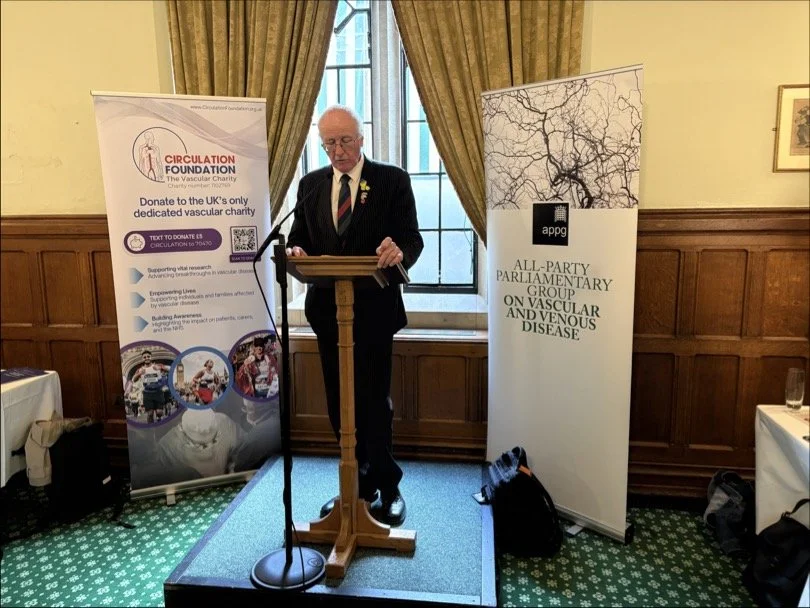

‘Making the Case for Reform in the Vascular Sector’ Report Launched
On Tuesday 17 March, the Vascular and Venous Disease All-Party Parliamentary Group (VVAPPG) launched its latest report, Making the Case for Reform in the Vascular Sector, setting out a clear roadmap for transforming lower-limb vascular care across England.
The report makes the case for a prevention-led, community-first model of care, centred on the establishment of dedicated multidisciplinary Foot Protection Services within every Integrated Care System (ICS). These services would enable earlier diagnosis, reduce travel and access barriers for patients, and relieve pressure on acute services by preventing deterioration and avoidable hospital admissions.
The report identifies 5 priority actions:
To support this transformation, the report identifies five priority actions for national leaders:
Fund and implement a National Foot Attack Pathway, supported by a public awareness campaign and mandated same-day or next-day triage standards.
Establish community-based Foot Protection Services in every ICS, aligned with National Wound Care Strategy Programme standards.
Introduce national maximum waiting times for vascular assessment and revascularisation, with transparent national reporting.
Reform commissioning to reward outcomes, incentivising earlier diagnosis, faster healing and fewer amputations.
Accelerate the adoption of proven innovation through mechanisms such as the NHS Innovator Passport to fast-track cost-effective technologies.
Please click here to read the report, for more comment please head to the publication part of the website.